Bangladesh erupts after activist’s killing as protesters torch newspapers

 People are seen at the entrance to the Daily Star building as it burns amid protests following the news of the death of youth leader Sharif Osman Hadi, Dhaka, Bangladesh, Dec. 19, 2025. (AFP Photo)
 Angry protesters stormed the offices of Bangladesh’s two leading newspapers late Thursday, torching parts of the buildings after the death of a prominent activist linked to last year’s political uprising.
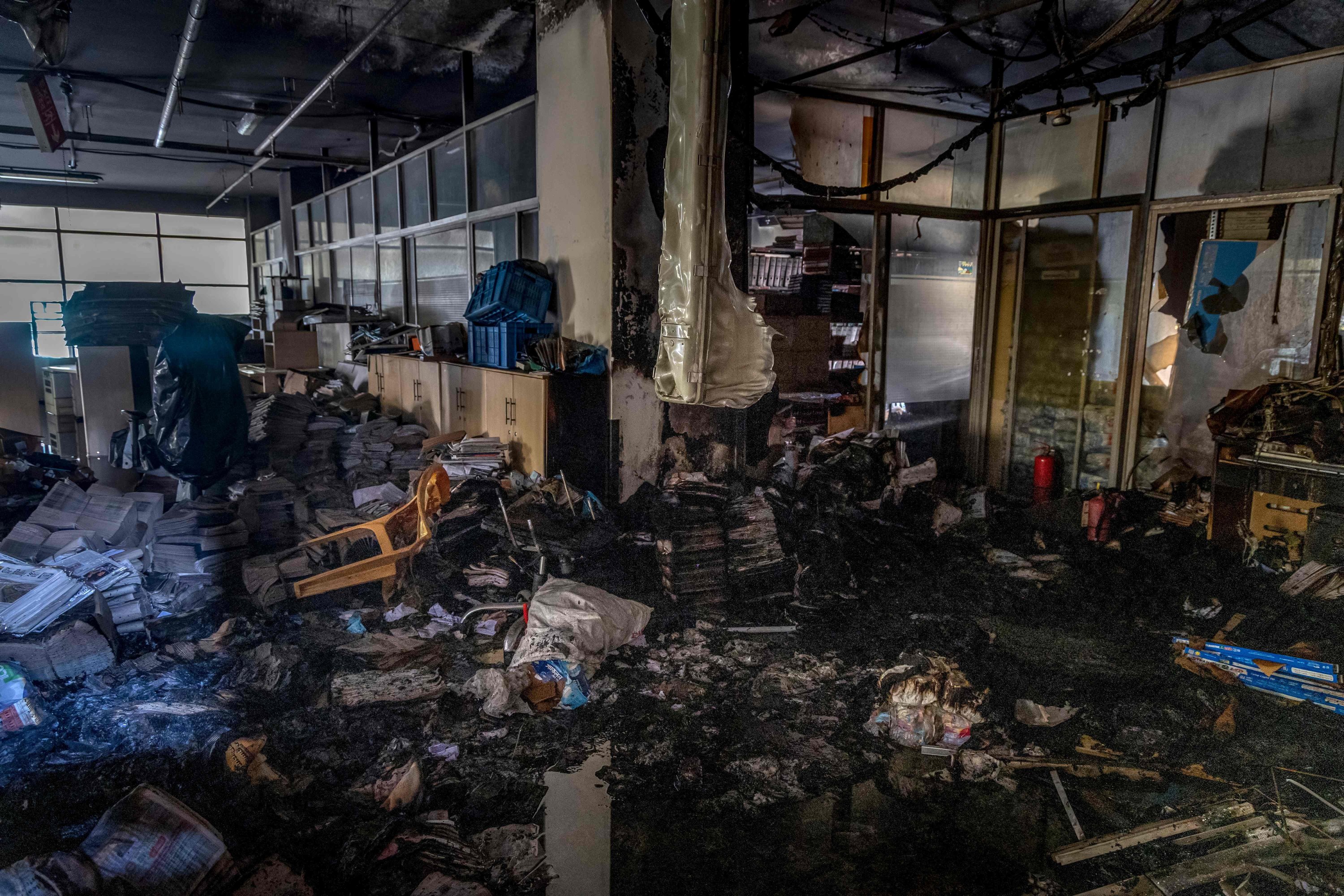
The attackers set fires that trapped journalists and other staff members inside.
Several hours later, those inside were evacuated, and firefighters brought the blazes under control early Friday.
The motive for the attacks remained unclear.
The newspapers’ editors are widely known to have close ties to Bangladesh’s interim leader, Nobel Peace Prize laureate Muhammad Yunus.
In recent months, several groups had staged protests outside the same offices, accusing the dailies of having links to India.
The violence followed the death of Sharif Osman Hadi, a spokesperson for the Inqilab Moncho cultural group, who died in a Singapore hospital late Thursday after a weeklong fight for his life.
Hadi was shot last Friday on the streets of Dhaka while riding in a rickshaw. Police said two men on a motorbike followed him, and one opened fire before the pair fled. After initial treatment in Dhaka, Hadi was flown to Singapore in critical condition.
Authorities said they have identified suspects and believe the shooter fled to India – remarks that sparked a new diplomatic dispute and prompted New Delhi this week to summon Bangladesh’s envoy to express its protest.
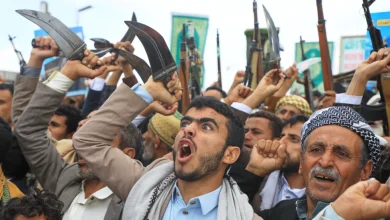
Witnesses and media reports said hundreds of protesters took to the streets of Dhaka immediately after news of Hadi’s death, rallying at Shahbagh Square near the Dhaka University campus.
Many chanted slogans such as “Allahu Akbar,” Arabic for “God is great.” Similar protests were reported elsewhere in the country.
Later, a group of protesters gathered outside the headquarters of the Bengali-language daily Prothom Alo in Dhaka’s Karwan Bazar area. They then surged into the building, vandalized it and set it on fire, according to reports from local media outlets.
A short distance away, another group forced its way into the premises of the English-language Daily Star and set the building ablaze, according to footage broadcast by Kaler Kantha, another major newspaper.
Soldiers and paramilitary border guards were deployed outside both buildings but did not disperse the protesters. Security officials attempted to persuade them to leave peacefully as firefighters arrived at the Daily Star site.
The blaze trapped staff members working inside the building late Thursday. One Daily Star journalist, Zyma Islam, wrote on Facebook that she was inside.
“I can’t breathe anymore. There’s too much smoke,” she wrote.
By early Friday, the fires were under control.
Both newspapers halted updates to their online editions after the attacks and did not publish print editions Friday.
Protesters also targeted Chhayanaut, a leading cultural institution associated with liberal traditions, in Dhaka’s Dhanmondi neighborhood late Thursday.
Dozens of protesters remained at Shahbagh Square on Friday morning and vowed to continue demonstrations.
Authorities said Hadi’s body would be flown from Singapore to Dhaka on Friday evening.
The attack on Hadi remains under investigation, but the shooting has heightened tensions. Human Rights Watch and Amnesty International have recently raised concerns about human rights violations in Bangladesh.
Yunus, who took office three days after Hasina’s ouster in August 2024, promised in a televised address late Thursday to bring Hadi’s killers to justice.
He announced Saturday would be observed as a day of mourning and urged citizens to remain calm.
Critics of Yunus and Hasina’s former Awami League party have blamed the interim government for the rise of militant groups in Bangladesh, a parliamentary democracy with a history of political violence.
The interim government has banned all activities of Hasina’s party, including participation in the February election. A Bangladeshi court last month sentenced Hasina to death on charges related to crimes against humanity stemming from the uprising.
On Wednesday, anti-India protesters attempted to march toward the Indian High Commission in Dhaka, prompting it to close its visa section. After Hasina’s ouster, India halted tourist visas for Bangladeshis, citing security concerns, while continuing to issue medical visas.
On Thursday, protesters in the southwestern city of Rajshahi tried to march toward the office of an Indian diplomatic official. Police stopped both marches.